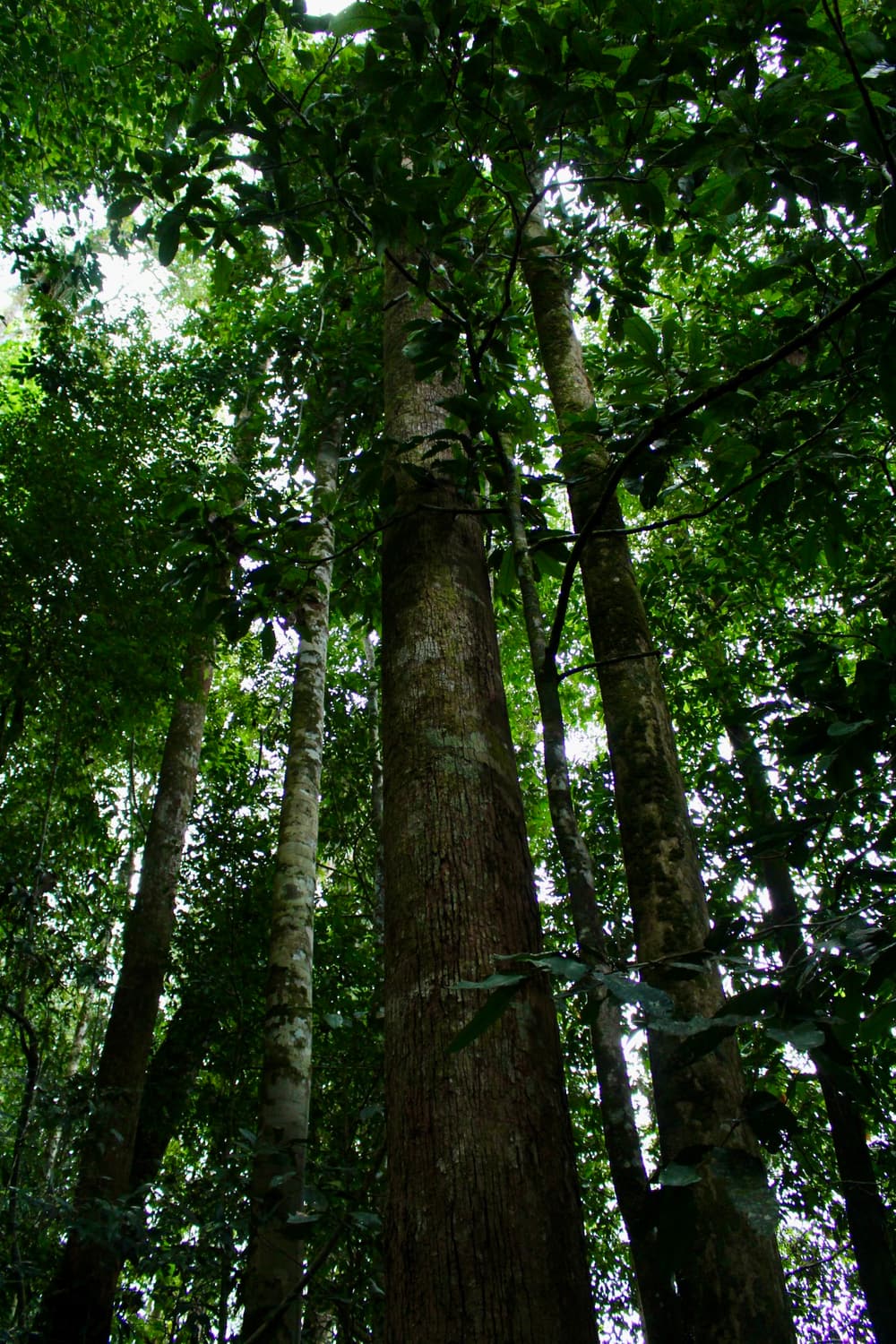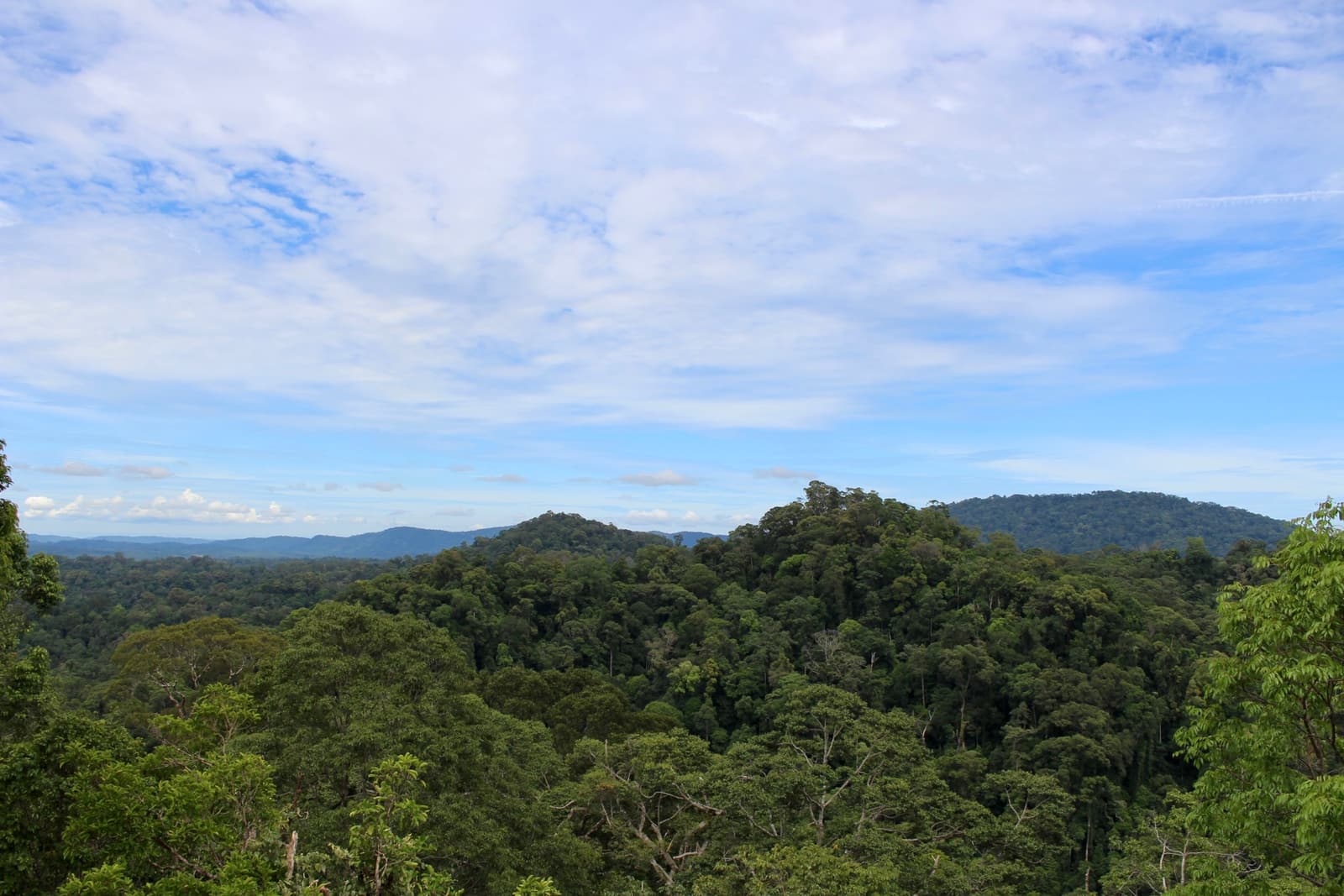
Temburong is the simplest wild place in Borneo to visit and one of the least crowded. You do not need jungle experience, special permits in your own name or much time — but a little preparation makes the difference between a sweaty slog and one of the best days of a Borneo trip.
The district in brief
Temburong is the easternmost of Brunei’s four districts and the least populated, with fewer than ten thousand residents in an area of about 1,300 square kilometres. It is an exclave: the Limbang district of Sarawak, which Brunei lost to the Brooke rajahs in 1890, lies between it and the rest of the country. The Temburong River drains the district from the mountains on the Sarawak border north to Brunei Bay, and almost everyone lives along it or along the road to Labu.
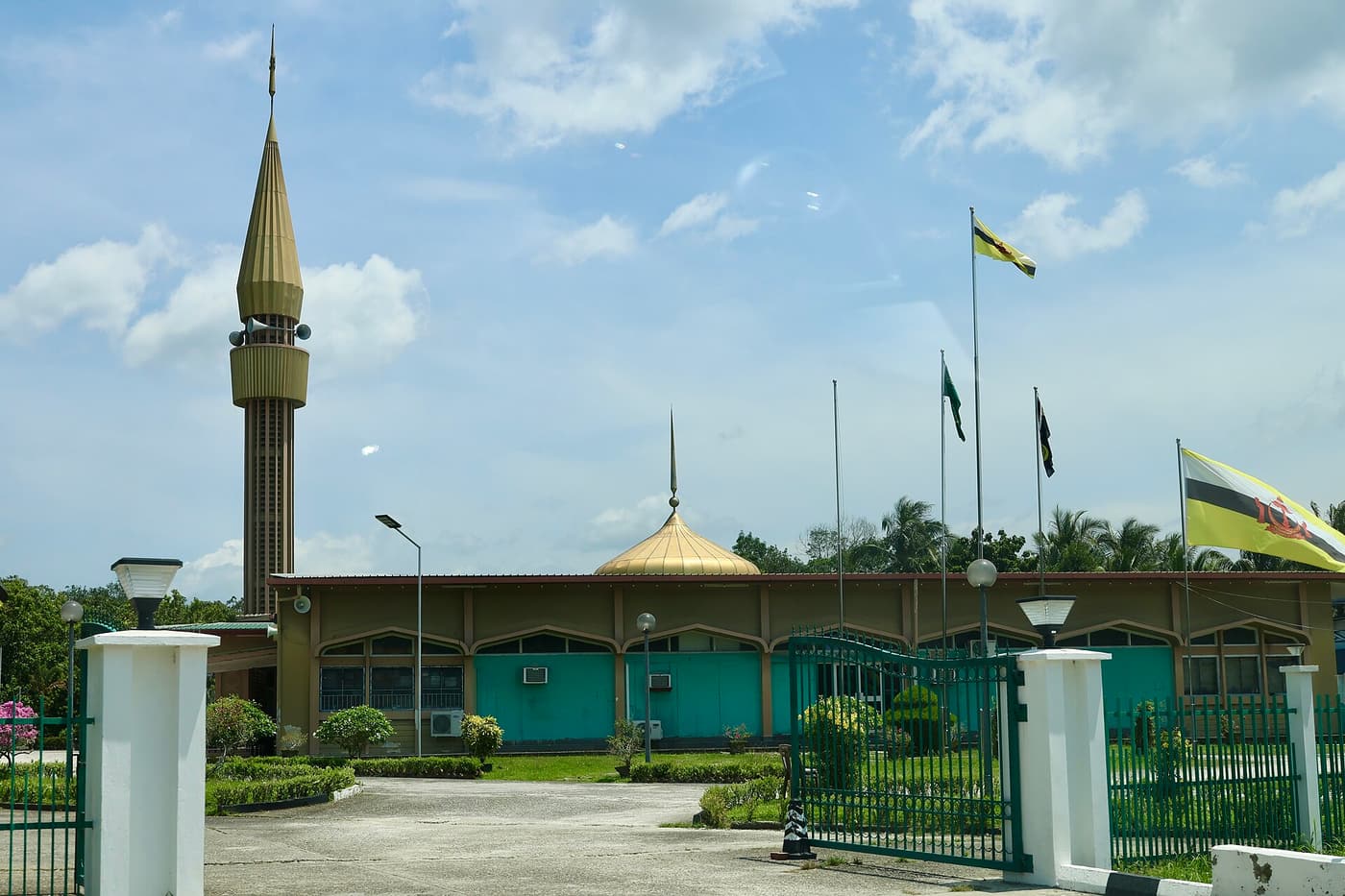
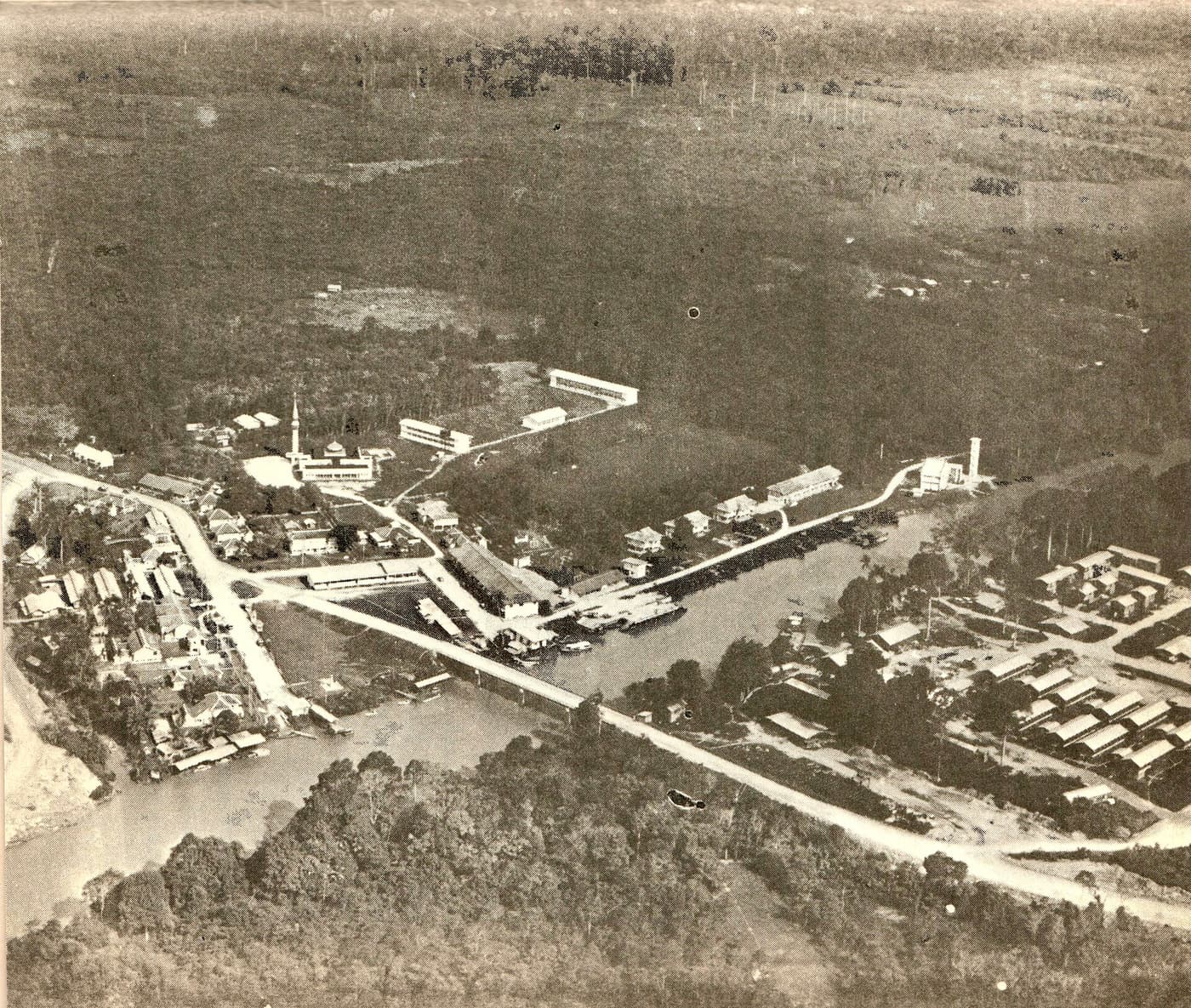
The people are a mixture — Malay, Murut (Lun Bawang), Iban, Kedayan and Bisaya among them — and the pace is rural. The administrative town is Bangar. South of it the road ends at Batang Duri, and beyond that lies Ulu Temburong National Park.
Why the forest is still here
Brunei’s income has come from oil and gas since the 1930s, so the country never depended on timber exports the way its neighbours did. Large areas were gazetted as forest reserves, and in 1991 the heart of the Batu Apoi reserve became the national park. A scientific expedition mounted at the same time by Universiti Brunei Darussalam and the Royal Geographical Society left behind the Kuala Belalong Field Studies Centre, which still works in the park.
Day trip or overnight?
This is the main decision. Both work; they give different trips.
| Day trip from the capital | One night at a lodge | Two nights | |
|---|---|---|---|
| What you see | Bridge, longboat, canopy walkway, waterfall | The same, plus sunrise or early morning on the walkway, night walk, river tubing | All of that at a slower pace, plus a longhouse visit or Bukit Patoi |
| Time on the ground | About 2–3 hours in the park | An afternoon, a night and a morning | Two full days |
| Comfort | Back to your hotel, shower and air conditioning | Simple rooms, fans, shared or basic bathrooms | As for one night |
| How to book | GetYourGuide day tours | Directly with the lodge operator | Directly with the lodge operator |
| Best for | Short visits, families, anyone unsure about roughing it | Wildlife, photographers, a real feel for the forest | Slow travellers and keen naturalists |
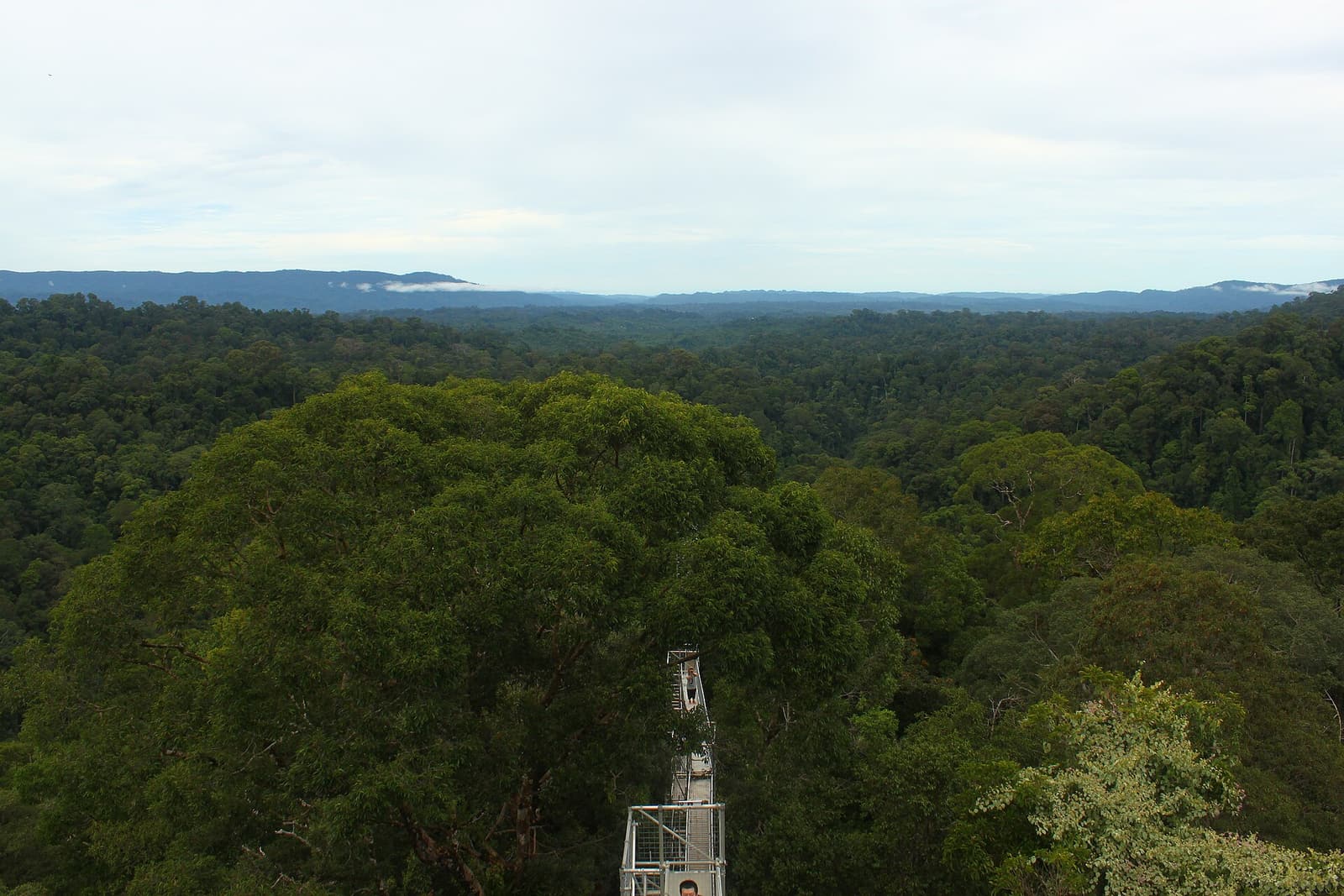 Ulu Temburong National Park
Brunei’s “green jewel”, reached only by river
Roughly 500 square kilometres of unlogged hill rainforest in the south of the district, with no road in. Visitors arrive by longboat from Batang Duri and see a small corner of it: the canopy walkway, a waterfall and the clear upper Temburong River.
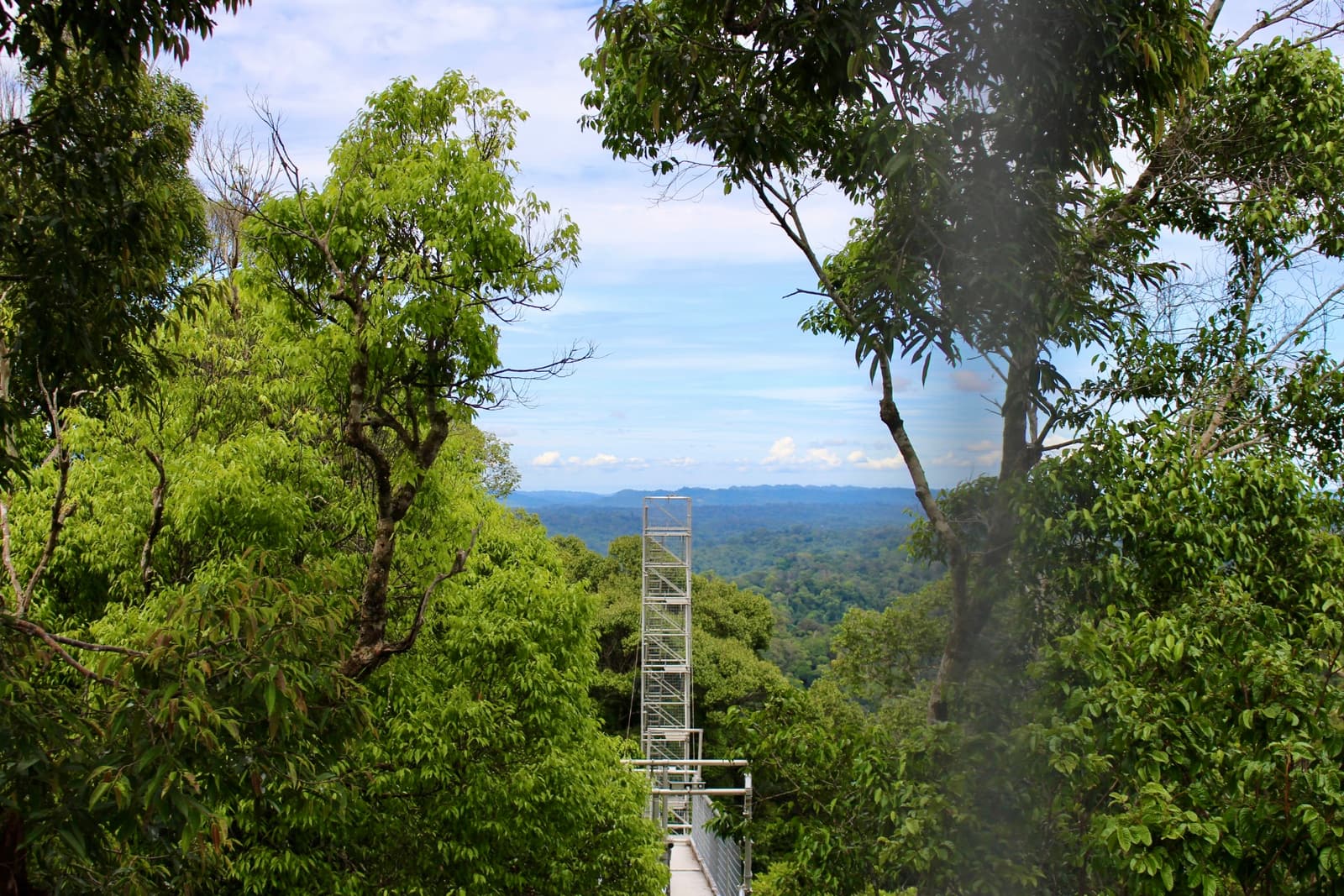 Ulu Temburong National Park
Canopy Walkway
Steel towers above the treetops
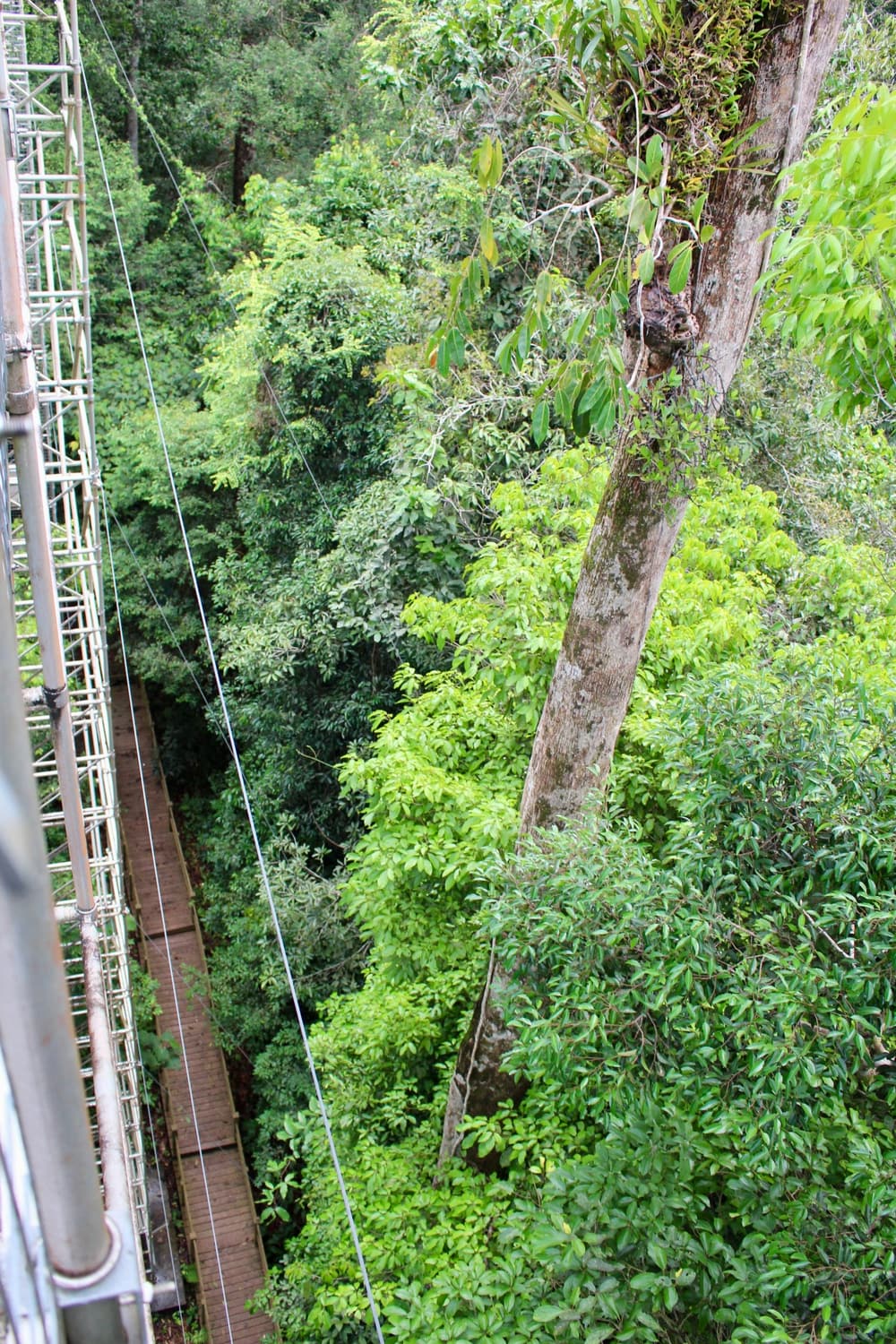
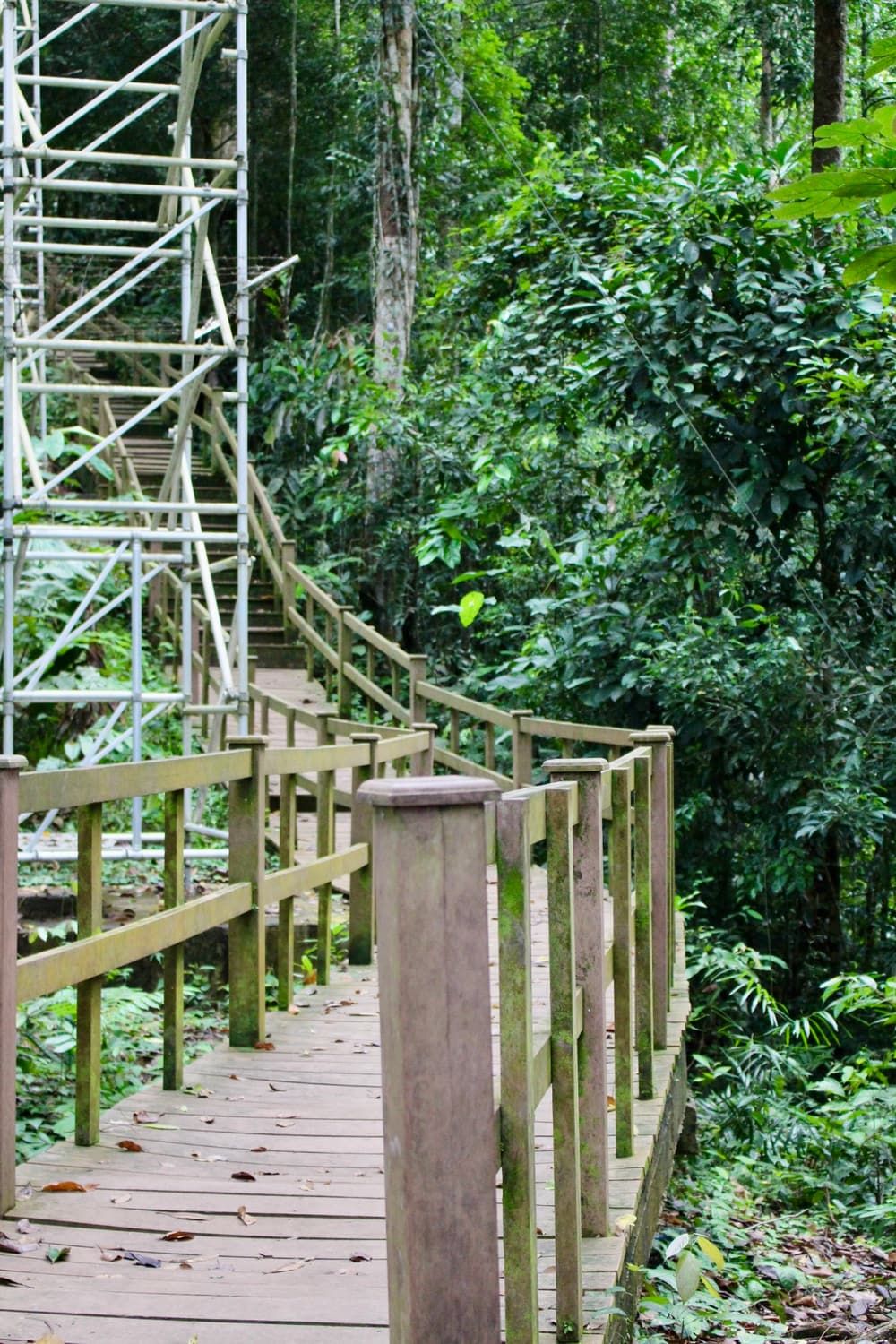
The park’s signature experience: a stiff climb up a stepped boardwalk, then scaffold towers of roughly forty metres joined by narrow bridges, with views over an unbroken sea of forest. Best at sunrise, good at any hour.
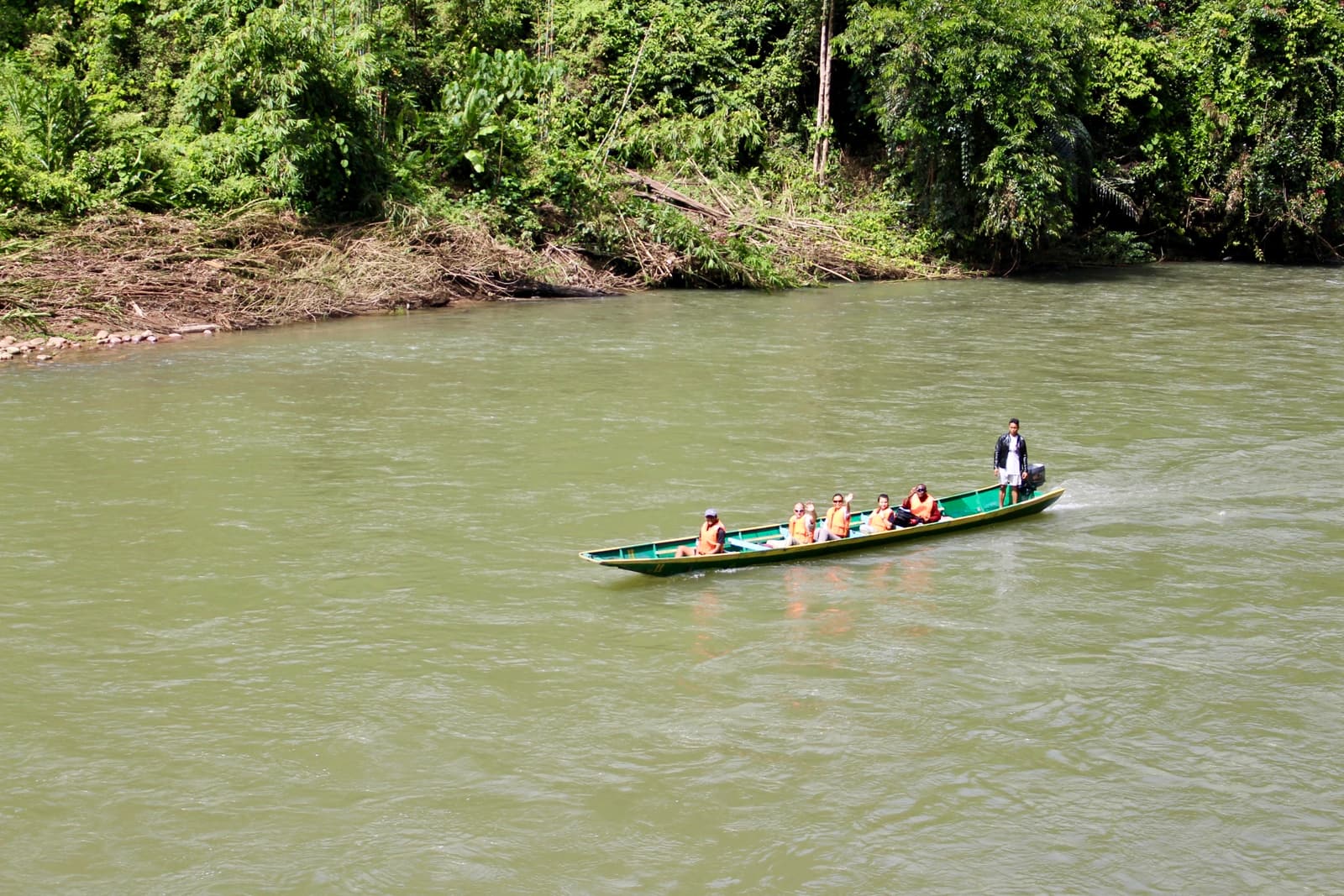 Ulu Temburong National Park
Batang Duri & the Longboat Ride
Upriver by temuai, the way everyone arrives
Where the road ends and the river takes over. From the jetty at Batang Duri, narrow wooden longboats run upstream through rapids and overhanging forest to the national park in about half an hour to forty-five minutes.
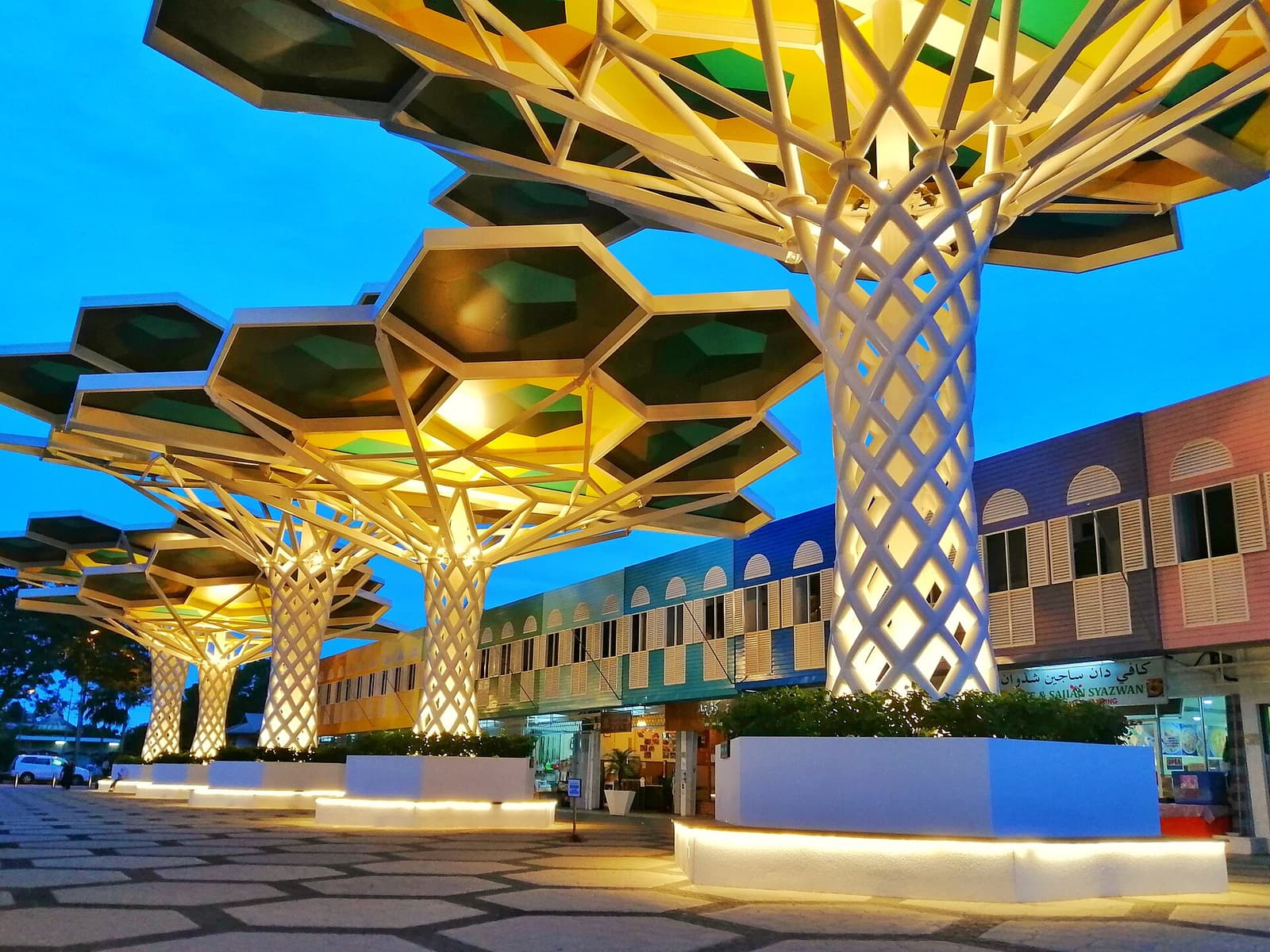 Bangar & around the district
Sample itineraries
- The classic day trip: pickup around 7 am; over the bridge to Bangar; on to Batang Duri; longboat to the park; canopy walkway; waterfall and a swim; lunch; back to the capital by about 3 or 4 pm. See the tours.
- Two days in Brunei: day one in Bandar Seri Begawan — mosque, Kampong Ayer, river safari at dusk; day two in Temburong. Keep them in that order if you can, so a rained-off forest day can swap with the city.
- One night in the forest: leave the capital after breakfast; lunch in Bangar; afternoon tubing and a night walk at the lodge; up before dawn for the walkway; back in the capital by mid-afternoon.
- Self-drive day without the park: cross the bridge early, climb Bukit Patoi, eat river prawns in Bangar, drive down to Batang Duri to see the river, and return before dark.
How fit do you need to be?
The day is not long on distance but it is hot, humid and vertical. The canopy walkway involves several hundred steps up a forest stairway and then open stairs inside a tower of roughly forty metres. Anyone who can climb the stairs of a ten-storey building with rests will manage. Getting in and out of the longboat needs a steady step, and the waterfall walk is along a stream bed.
Costs and money
The currency is the Brunei dollar (B$), fixed at par with the Singapore dollar; Singapore notes are accepted everywhere. Day tours on GetYourGuide start at around €122 per person at the time of writing, which is typical for Brunei: the boat, the guide and the long transfer make this an expensive day by regional standards. Overnight packages cost more. Bangar has cash machines, but carry enough cash for meals, snacks and tips before you leave the capital; cards are of little use south of the town.
Food and drink
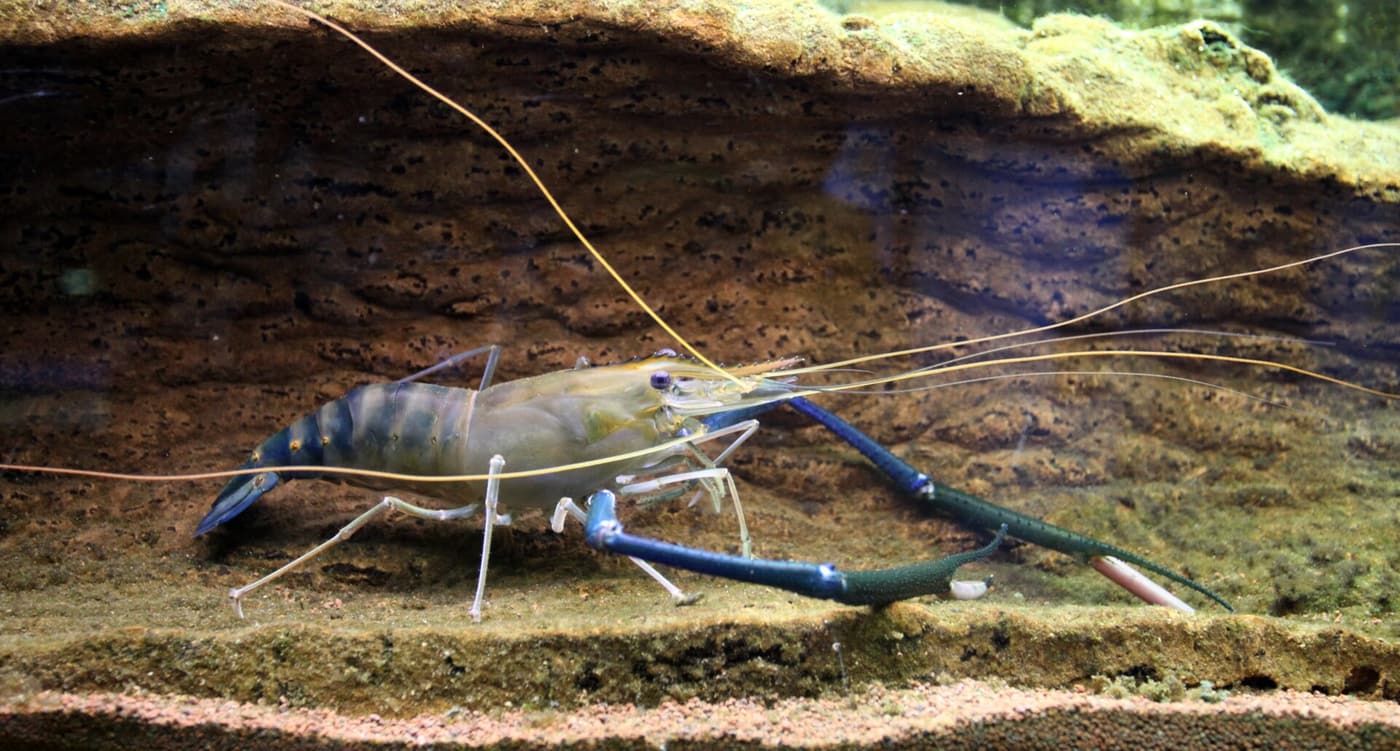
Tours and lodges provide simple Malay-style meals — rice, chicken or fish, vegetables, fruit. In Bangar, try the district’s speciality, udang galah, giant freshwater prawns, along with wajid Temburong, a sweet of sticky rice, coconut milk and palm sugar wrapped in leaves, and a bowl of the local cendol. All food is halal. Alcohol is not sold anywhere in Brunei.
Local laws and etiquette
- Alcohol: not sold in Brunei. Non-Muslim adult visitors may bring in a limited duty-free allowance for private use and must declare it on arrival.
- Dress: forest clothes are fine in the forest. In Bangar and the villages, cover shoulders and knees.
- Fridays: shops, restaurants and offices close from about noon to 2 pm for prayers.
- Ramadan: eating, drinking and smoking in public during daylight are not permitted; tours still run and lodges serve their guests.
- Drugs: penalties are extremely severe.
- In villages and longhouses: ask before photographing people, remove your shoes indoors and accept hospitality graciously.
Safety and health
- Heat: the commonest problem. Drink more than you think you need and rest on the climb.
- The river: wear the life jacket, swim only where your guide says, and accept a cancellation when the water is high.
- Insects: use repellent; cover up at dusk. Ask a travel clinic about recommended vaccinations and mosquito-borne illness before any Borneo trip.
- Leeches: present after rain, harmless, and easily flicked off.
- Medical care: Bangar has a small hospital; serious cases go to the capital. Make sure your travel insurance covers adventure activities and evacuation.
- Crime: Brunei is one of the safest countries in the region.
Language and connectivity
Malay is the national language and English is widely understood; guides work in English. Iban and Murut are spoken in the villages. Mobile coverage is good in Bangar, thinner along the Batang Duri road and patchy to absent in the national park, so download maps and tell people at home you will be out of reach for a few hours. Power sockets are the three-pin British type.
What to pack
- Light, quick-drying clothes and a full change for afterwards
- Shoes with grip that can get wet — trainers or sports sandals, not flip-flops
- A dry bag for phone, camera and passport
- Insect repellent, sunscreen and a hat for the boat
- At least a litre of water, and a small towel
- Swimwear under your clothes if you plan to swim at the waterfall
- For overnight stays: a torch, a light long-sleeved top and any medicines you need